
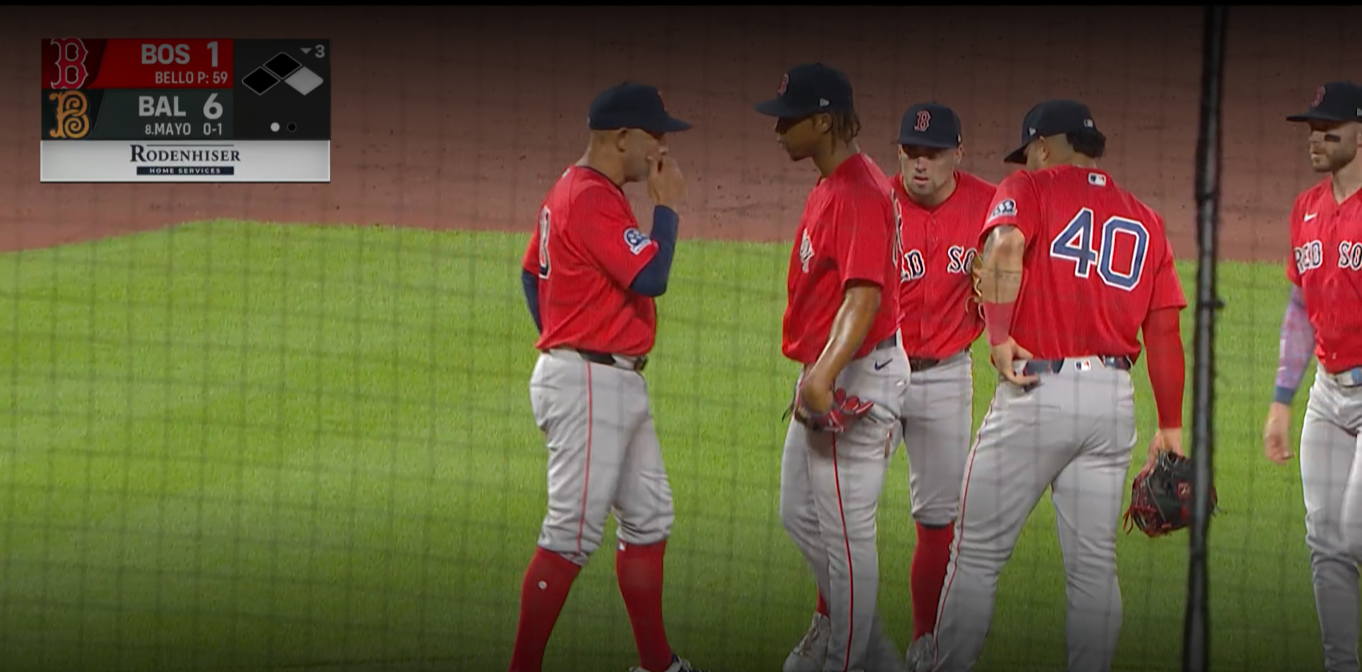
Due to blackout restrictions on MLB.TV, I was unable to watch the Boston Red Sox vs. Baltimore Orioles game on TV. Instead, I took to the airwaves and listened to it via the radio feature on MLB.com. I listened as the Orioles took starter Brayan Bello to task batter after batter after batter. Heck, 15 pitches into Bello’s outing, the Sox were already down 3-0. Bello was throwing the ball over the plate and the Orioles did not miss any opportunities. His pitching line – 3.1 innings (which means he pitched into the 4th inning and recorded 1 out), 13 hits, 8 runs (8 earned), and the most glaring, five home runs allowed. Certainly one outing to forget from ownership down to the reserves on the bench.

There was a moment in the bottom of the 3rd inning, with one out, a home run recently given up, and then a walk issued, where Boston Red Sox Manager Alex Cora nearly sprinted out of the dugout to pay his struggling pitcher a visit. In baseball terms, this is called a mound visit. Typically, a mound visit is a time out by a coach, catcher, or infielder to give a struggling pitcher a mental breather. If a pitching coach or manager comes out for a mound visit, it could be a counseling session on mechanics or tipping a certain pitch or rhythm. On many occasions, a manager’s mound visit means a relief pitcher is coming in. On rare and sometimes much needed occasions, a mound visit is an “ass chewing” type visit to wake up or challenge a pitcher to overcome the odds and get outs, or else. Last night’s mound visit by Cora would most definitely fall in the “ass chewing, let’s freaking go” category based on body language of Bello and, let’s be honest, the other mound visitors just listening. Bello is a professional, he gets paid to be a Pitcher for the Boston Red Sox, and so this type of visit was warranted in my opinion.
So are professional baseball teams the other ones that institute some form of mound visit? Of course not. Mound visits can be seen on youth baseball fields this morning in any city, any town, in any country anywhere baseball is played. A young ballplayer on the mound, not quite physically nor mentally ready for the prime time of a Saturday morning game, can struggle at times. The youth baseball coach, clip board or iPad in hand, recognizes the struggle, consults with the other Moms and/or Dads in the dugout, and then waits for the precise moment to call time out, and head out to the mound for a little chat. It happens this way when the ball player is 6, 16, 26 – the mound visit concept doesn’t change, the players just get older.

So, when I heard Cora going out to the mound last night, then this morning watching it on the recap of the game, it reminded me of my typical mound visit. First, as a player/pitcher, my coach or manager would come out and ask me if I was tired, if I was hurt, if I could finish an inning, if I knew where the actual strike zone was or did he need to draw me a map. I would stand there, on the mound, and listen and nod and do my best to re-center my energy based on his astute observations. Then, as a coach/manager, I would walk out and talk to my pitcher (sometimes my son) and ask how they were feeling, were they having fun, were they hurt, and then impart some of my pitching knowledge to help guide them through a tough inning. The mound visit is essentially a mental time out. Pitching is as much mental as it is physical. So, my pitching coach and then myself as a coach was providing a much needed mental break to an overly stressful situation.
Do mound visits work? Many times, yes. For Bello and last night’s game, unfortunately not exactly. Bello was toast in the first inning and probably should have been lifted after the Orioles torched him for 4 runs. Cora did what most professional managers and pitching coaches would do – a stern chat with some cheerleading and motivation quotes mixed in with (likely) some choice words and swears. At the youth baseball level, it is more about encouragement than the F word, and most times those words of encouragement actually pan out and the pitcher gets out of a jam. The “getting out of a jam” situation can be a springboard for a youth ballplayer, who learns how to mentally relax on the mound as he/she recalls the words of encouragement by the mound visit. Personally, I love the mound visit and the potential it brings to a stressful situation. So, pitchers, if you are struggling on the mound, be prepared for the mound visit and pay attention! You just might learn something and get out of your bases loaded jam!
Discover more from The Baseball Storyteller
Subscribe to get the latest posts sent to your email.


