
Did you happen to catch this play last year featuring the Boston Red Sox vs. Toronto Blue Jays:
The Boston Red Sox RF (Right Fielder) Wilyer Abreu fielded a rocket line drive single from the Toronto Blue Jay’s Alejandro Kirk, fielded it cleanly, and did an unthinkable MLB move. Abreu charged the baseball and fired a strike to first base to throw out the baserunner Kirk by a half step or so. Typically, and even more so because there was already a runner on first base, the RF would throw the ball into the shortstop or 2nd baseman as a standard play. But Abreu decided to buck tradition and pull out one of the cherished “Little League” plays and throw to baseball to first to beat the batter to the bag. And he was successful. And boy, that had to be embarrassing for Kirk and exhilarating for Abreu. And to add insult to the situation, it was the game ending play. You don’t see too many 9-3 outs in baseball scoring in professional baseball, let alone MILB, college, even summer collegiate ball so this one was really special.

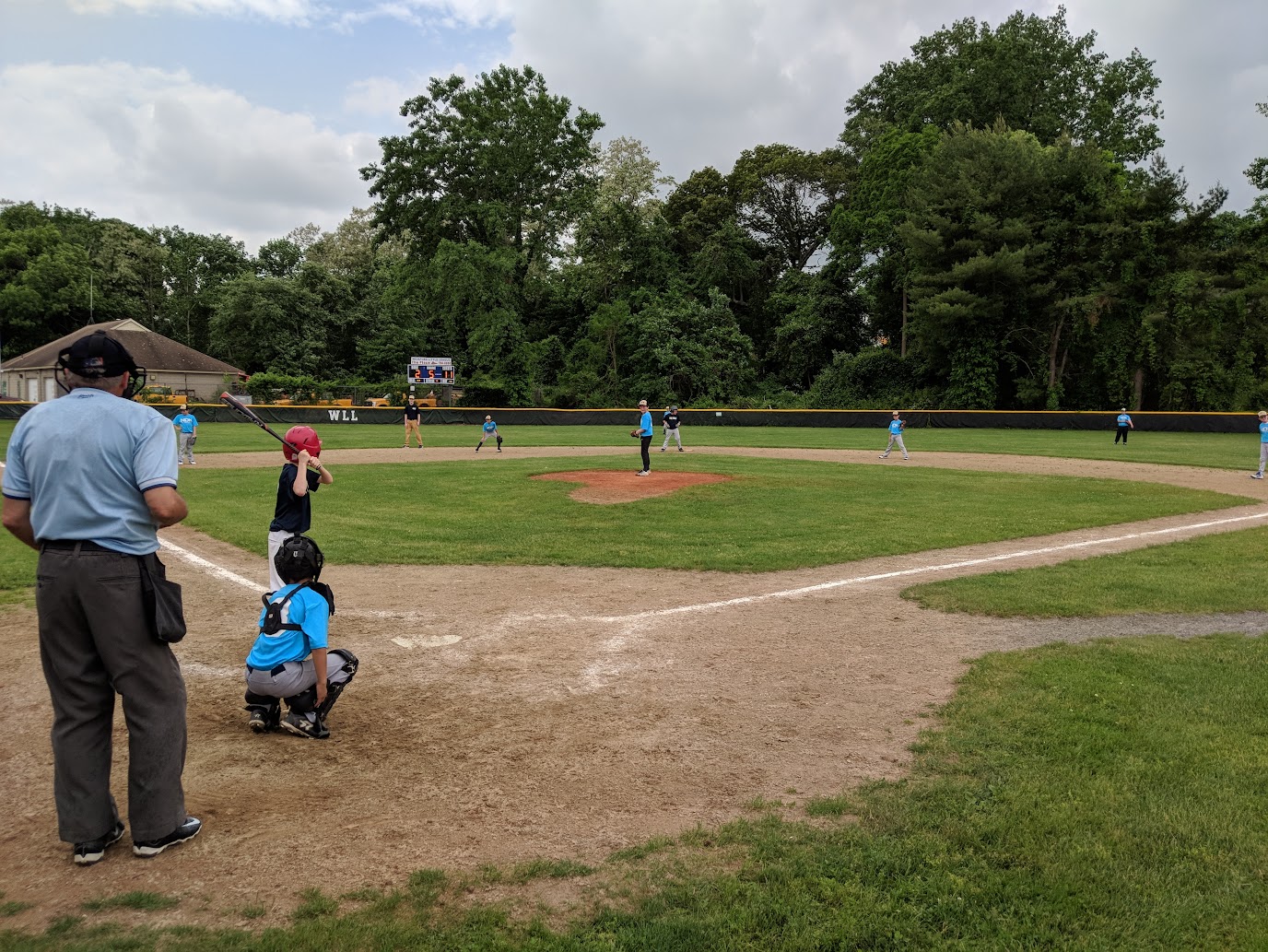
So, what are “Little League” plays that players, coaches, announcers, and fans refer to when they watch a high level baseball game, like MLB? Simply put, they are the plays that tend to stay at the Little League level because skill levels, athleticism, and baseball knowledge develop to graduate a player from being involved in one of those plays. Take the RF to 1st base putout as an example. On a Little League field, a RF may be playing shallow enough to field a groundball hit to him/her and have enough time and arm strength to throw out the batter at first. But, a high school field is much, much larger and outfielders do not hover anywhere near the infield on a typical defensive alignment. Most balls hit to a RF are fielded, then the RF will toss the ball into 2nd base or to a cutoff fielder. On the very rare occasion, say if the batter falls down, would a RF even attempt to throw a batter out at first on a ground ball hit to RF.
Another “Little League” play I like to watch ballplayers on the big field attempt is the first and third base runner trickeration. You’ve seen this one, I am sure. You have a runner on first base and third base. Both runners take a lead. The pitcher comes to the set and the runner from first takes off for second and “falls” down halfway to second. The pitcher, steps off the rubber/mound, and approaches the fallen runner from first base. All the while, the runner from third takes off for home plate. The fallen runner gets up and into a rundown while his teammate (the runner from 3rd) crosses home plate. I love watching this one from a runner’s standpoint and also how the defense reacts to it.

How about the ultimate April Fool’s Day play on a baseball diamond? The hidden ball trick. Here is the most popular hidden ball trick, in my opinion, as performed on the Wichita State University team by the University of Miami in the College World Series:
The hidden ball trick is often attempted on a Little League diamond, mostly because a large percentage of the players are not paying attention to the game on the field. They are checking out butterflies and their buddies in the stands and the hot dog stand. Have you met a 5 to 10 year old? Their attention spans are limited to say the least, so the hidden ball trick often catches someone napping off a base. With maturity and age and baseball knowledge, the hidden ball trick becomes rather difficult as you go up the ranks into middle and high school, college, and the pros. But, every so often, a professional team will try one and actually make it happen. And when it does, it is absolute gold!!!
Here a few “Little League” plays that rarely make it out of the Little League diamond of play to the “big fields:”
- Center fielder fields a groundball or catches a pop fly, then runs into the infield to tag baserunners, logging several hundred yards of sprinting. As the player matures, he/she knows to field the baseball or catch the baseball, then throw the ball into the infield instead of running around the diamond 50 times.
- A “Little League” triple on a big field is not really a triple in the scorebook. It is a swinging bunt that an infielder or pitcher fields, then throws wildly over the 1st baseman’s head, into the outfield or foul line, allowing the hitter to circle the bases all the way to third base. Actual scoring is an E1 or E5, not a triple. But, it is still fun to see a really fast hitter/runner take advantage of a bad throw and advance an extra base to 3rd.
- The “Little League” home run on the big field happens when a ball is hit sharply to the outfield and the outfielder simply missteps and misplays the baseball without touching it. If a player touches the baseball, it is not technically a home run and will likely be scored a hit and an error. But, if the ball is hit down the line or on a line to a fielder and the fielder completely “whiffs” and the ball rolls and rolls in the outfield, the runner circles the bases and “walks” home, it is a home run in the books – whether you are in Little League or at Fenway Park.

I watch a lot of baseball games – live or on TV – and always love the “Little League” plays on the big field. Whether it is a high school, summer collegiate, Minor League, or Major League game I love it when the big kids get to act like little kids and process how to navigate through a “Little League” play. What are you favorite “Little League” plays that still occur on a big field baseball diamond? Let me know, I am always interested in a great baseball story.
Happy April Fool’s Day everyone. If you are playing a game today, try out the hidden ball trick against your opponent today. It makes for a fantastic April Fool’s Day gag!!!


Discover more from The Baseball Storyteller
Subscribe to get the latest posts sent to your email.


