
I have listed visiting the Negro Leagues Baseball Museum in Kansas City as one of my top destinations for years. So when I had the opportunity to visit the museum last week on a work trip to the Kansas City area (ArcBest), I jumped at the chance. After a rather disappointing visit to Kauffman Stadium, I was ready for a baseball boost of excitement and a rush of baseball history that a place like the Negro Leagues Baseball Museum could offer. And from the second I stepped foot into the museum, I was immersed in history, stories, photographs, and player profiles galore.

After stepping foot inside the museum, I paused for a moment to take in what I was about to experience. On the walls, there were hundreds of photographs and printed media and posters and game day memorabilia. To my left as I entered the first viewing area, there was a defensive alignment of players honoring some of the greats of the Negro Leagues, known as “The Field of Legends.” To my right and straight ahead, the many important exhibits with player profiles, team profiles, manager profiles, and so many great photographs. I kept telling myself to slow down, read every exhibit’s information, cherish the fact that items were preserved for future fans, and learn what I could about what I didn’t know before I walked in the door. There was so much to see and I was eager and excited to get from one exhibit to another. The fact that the museum was busy on Tuesday was a bonus because I couldn’t just blow through the exhibits. I had to wait my turn to go step by step through the museum.


One of the first things that stood out to me was the authenticity of the museum’s theme – the Negro Leagues were a legitimate baseball league with star players, important to the history of baseball. There were no doctored photos, most were in black and white and well preserved. The posters, the game day signage were amazing to read and experience. The uniforms and baseballs and bats and catcher’s gear and gloves were fascinating to look at. If you think you know anything about the history of the Negro Leagues or its players who helped integrate Major League Baseball, think again because this museum will humble even the most learned baseball historian. I walked around in awe of the accomplishments, the struggles, and the stories of these baseball men and women presented to me on the walls of this museum.

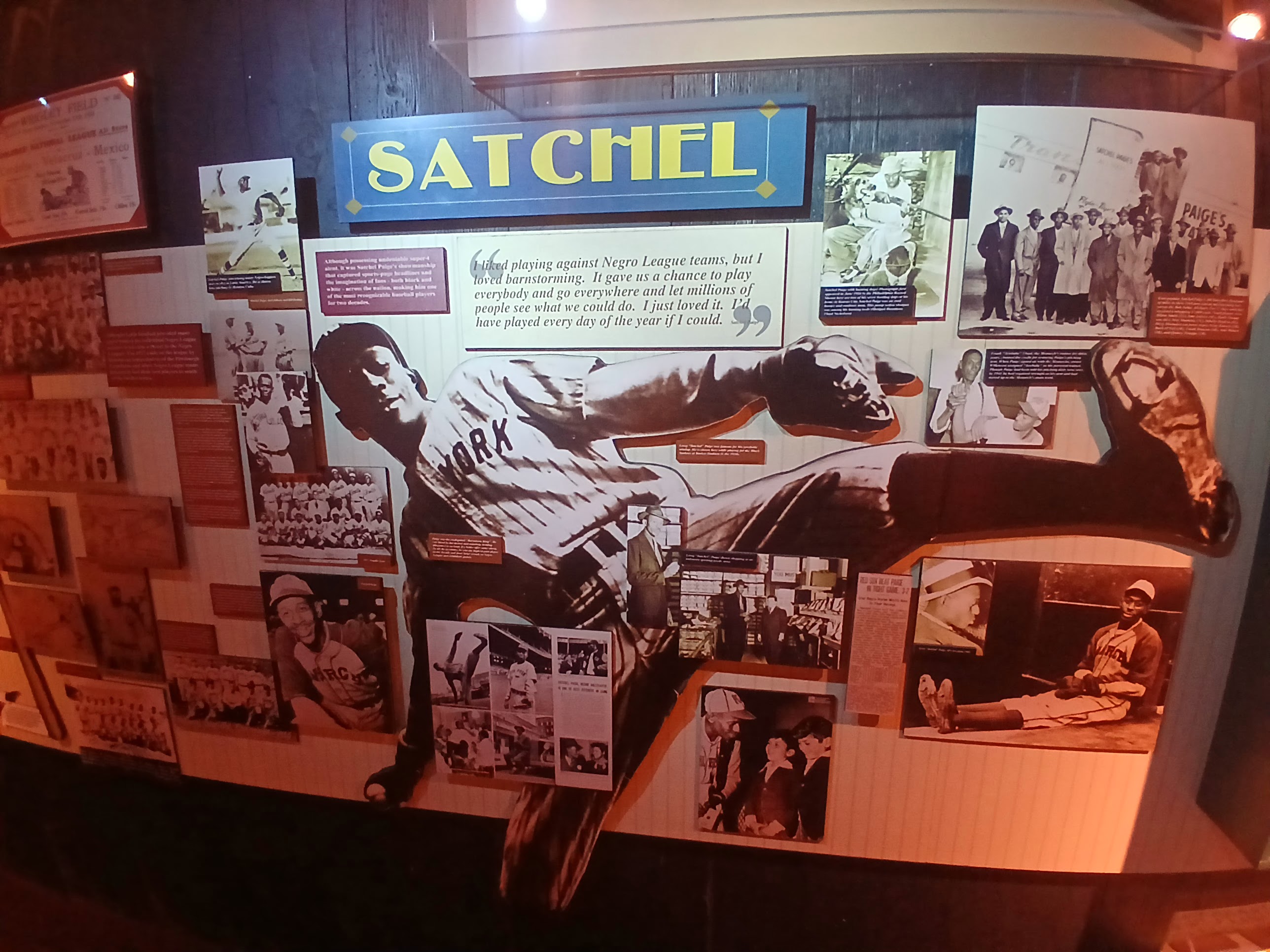
Like many baseball fans and historians, Satchel Paige is one of my favorite baseball players of all time. His personality was a large as his hands that gripped the baseball. His stories were as legendary as his multiple decade career as a professional baseball player. So many tales have been spun about Satchel and many from Satchel himself – true or not – they are incredible baseball stories. I’m not even sure I could compare him to any one player today but I will try. Satchel Paige was Juan Soto, Paul Skenes, Aroldis Chapman, Fernando Tatis Jr., and Aaron Judge wrapped up in a tall, slender, athletic, outgoing, confident, and independent baseball player that every fan of every race would pay their weekly salary to go see play baseball. If you have the chance, read his biography or autobiography or better still, visit the Negro Leagues Baseball Museum and read his exhibits. Satchel Paige is one of the most fascinating human beings to have ever lived, that is a fact.


The Negro Leagues Baseball Museum did a great job of not only honoring Satchel Paige’s contribution to baseball, but so many others who may have been cast aside historically. The step by step approach to this exhibit allowed me to learn about players I hadn’t heard of before. And to read more about players I had heard of like Josh Gibson, Cool Papa Bell, Buck O’Neil, Judy Johnson, Martin Dihigo, and so many others. I loved the room with the uniforms and player profiles and player history. And the timeline for baseball to integrate players into their organizations. Humbly speaking as a lifelong Red Sox fan, it is well documented that the Boston Red Sox were the last team to integrate their club, with the addition of Pumpsie Green in 1959, some 12 years after Jackie Robinson’s debut with the Brooklyn Dodgers in 1947. Sad part of history, this one was tough to read.


I had read about an incredible gift from Rush front man Geddy Lee a few years back but had no idea of the extent of his gift. At the Negro Leagues Baseball Museum, there are three huge glass cases of signed baseballs by former Negro Leagues Baseball players – a gift from Geddy Lee to the museum. This has to be one of the most impressive collections of signed baseballs in any museum, anywhere. Check it out.


Standing in their usual defensive positions were statues of some of the greatest to ever play the game of baseball. I walked down to Josh Gibson at home plate and followed the path up to the pitcher’s mound and Satchel Paige, then walked the infield and outfield, stopping at each statue to read their names. Buck Leonard, Judy Johnson, Ray Dandridge, Oscar Charleston – some of the players I knew of and others I will research and learn more about in due time. Fans at the museum took photos with some of the statues. Others like me just walked the defensive perimeter and marveled at the players. Still others sat on a park bench just past where the statues where and looked rather dreamy gazing upon the statues. It was a place for reflection for some, a place of wonder for others, and an incredible last stop for many at the museum. For me, I circled back into the museum and went through it again, hoping I didn’t miss a single part of it.


I left the Negro Leagues Baseball Museum better than when I arrived. If you allow yourself to be in uncomfortable conversations with the goal of getting better, you will often times find a similar result as I did walking out of this important historical museum. Race in baseball is part of the ugly history of the game. It prevented players from not only playing baseball but earning a living, feeling validated for their hard work and dedication to the game, and more importantly being respected as a human being. And that extends to their families, their kids, their wives as well. Before Major League Baseball integrated in the late 1940s, you couldn’t play baseball professionally if you were not white. And even decades after baseball integrated to allow non-whites to play, racism reared its ugly head in the minors and major league stands, press rooms, locker rooms, and stadiums throughout the United States. The Negro Leagues Baseball Museum tells the stories of great baseball players who had to endure even greater life challenges to exist in the baseball world. They were heroes, they inspired millions to follow, they are now immortalized for generations of fans to enjoy and learn and yes, get better as human beings.

When in Kansas City, take the time, take the opportunity, and please visit the Negro Leagues Baseball Museum. It is one of the best baseball experiences I have ever been a part of. And I know you will feel the same the second you walk through those doors. For more information on the Negro Leagues Baseball Museum, head over to their website – https://www.nlbm.com/
Discover more from The Baseball Storyteller
Subscribe to get the latest posts sent to your email.


One thought on “A Walk Through Baseball History At The Negro Leagues Baseball Museum, Kansas City”