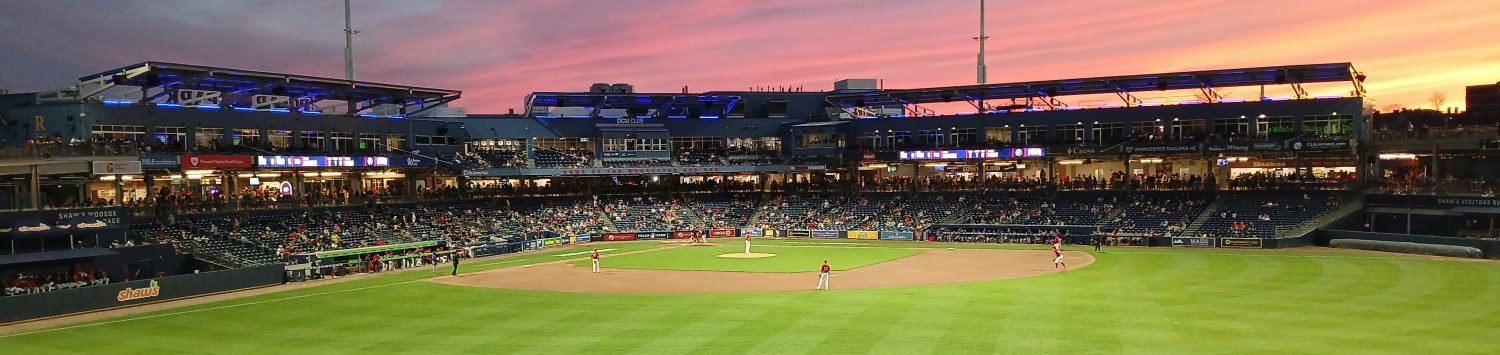

Over the past month or so, I have thoroughly enjoyed meeting, chatting, and emailing folks from the Vintage Base Ball community. I have spoken with players, vendors, umpires, fans, and fellow vintage base ball writers and just love the positive vibe everyone has. In my undying quest to learn anything and everything about Vintage Base Ball, I have continued to reach out via email to vendors on equipment, uniforms, hats, baseballs, and more. And one vendor recently returned my emails, Smokeshow Woodworking.
I reached out to Nick at Smokeshow Woodworking to ask him some questions about the Vintage Base Ball equipment he makes, the process behind it, and how folks can get in contact with him to place an order or learn more about his bat company. Here is an excerpt from our email conversation:
So Nick, in researching Vintage Base Ball leagues and teams, I have discovered that it’s not just the uniforms and the baseball that is period specific. The player’s vocabulary, the way they celebrate a good hit or a strikeout, nothing must resemble a modern player’s demeanor. So, in keeping with this, does the Vintage Base Ball world have a period specific bat that they suggest to players?
The rules are pretty open ended on the specifics, stating that “The bat must be round, and must not exceed two and a half inches in diameter in the thickest part. It must be made of wood, and may be of any length to suit the striker.” That said, the custom at the time was for bats that are 10%-20% larger than even the largest modern bat today. The philosophy of early base ball was that larger, heavier bats resulted in more power and it was reflected in the standards of the time. The below image is an ad from the turn of the century that is advertising bats as long as 40″. Of course not everybody goes that large, but it’s hardly unheard of.
What are the common bat specifications?
The most popular specifications in my experience are 33″-35″ in length, and 32oz-36oz in weight. Comparatively, modern baseball bats are 32″-34″ long and 29oz-32oz in weight with a consistent “drop 3” guideline (the weight is 3oz less that the length of the bat in inches). I’ve found that while the drop 3 guideline makes for a nice feeling bat, many vintage players opt for bats that are either neutral or are heavier than they are long.
Can you go to a major sporting goods retailer and purchase a vintage base ball bat?
By the letter of the rule, a player could go down to their local sporting goods store and get something usable. However vintage ball is all about the spirit of the rule and the times in which they were written which is why modern features such as cupped ends, excessive drop values, or more dramatic tapers could be frowned upon. We may be base ball players, but we’re also reenactors and try to be as accurate as we can be with respect to the earliest days of the game.
I recall doing a story years ago on a dinner hall in Narragansett, Rhode Island (The Towers) which had some hurricane damage to the roof and structure. The Towers staff consulted a period specific carpenter to reconstruct the roof and shingles just as it was built some 100 years ago. Are the bats you manufacture made in this manner or do you use modern woodworking tools and technology?
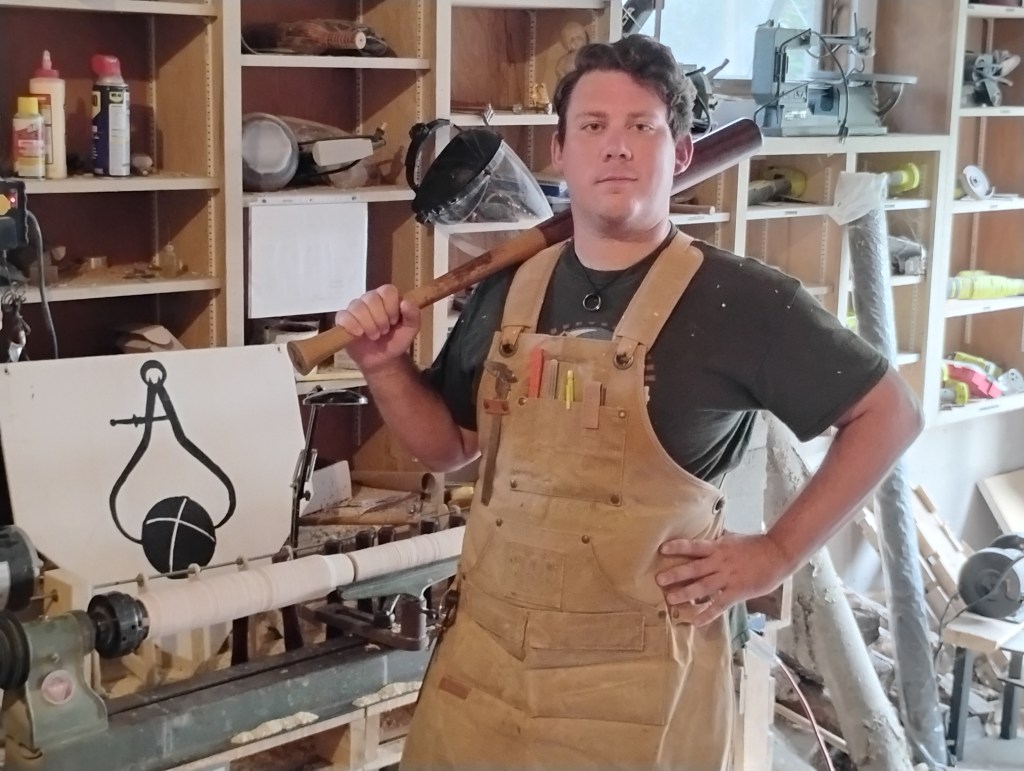
Interestingly enough, the lathe (the equipment which I use to make the bats) has remained largely unchanged over the past 150 years, so I would say that most of the basic tools techniques that any modern woodturner would use today are the same as what would have been used then. Admittedly, the most modern part of my process is the CAD (Computer Aided Design) software I use to create the initial design and drawings of what I want to do. As for the actual fabrication I’ll use certain modern conveniences such as an electric drive motor and safety equipment, but as it turns out my lathe (purchased secondhand off the internet) was made in 1947 so it’s a little closer to 1864 than you might think!
Please go over in whatever details you are comfortable disclosing the steps of making a vintage base ball bat.
First up is the design. Without a good design your chances of an acceptable final product lessen, and that’s even without trying to make a custom bat and maintain the customer’s specifications. Communication is always key so I prioritize working with the customer to determine their needs, answer any and all questions, and write up a specification. I’ll create and send out a drawing of a design proposal to my customer for them to give it a look and either approve it or let me know any changes they might want. Typically this process is quick but it could take over a week and multiple designs for more discerning customers, which I’ll happily spend the time on in order to make sure the customer gets exactly what they want.
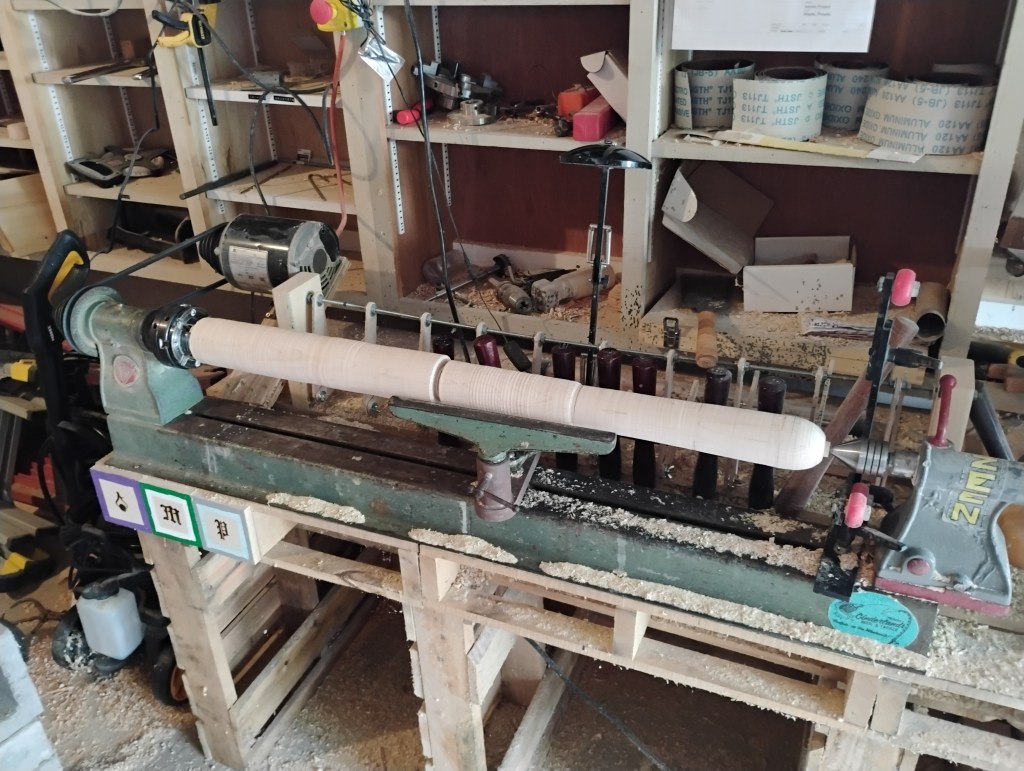
Step two is to select a piece of wood, or a “blank”, from what I have available. This is critical as each piece needs to be inspected for any cracks, knots, or other defects that may impact the integrity of the bat.
Step three is to mount the blank on the lathe and turn it to a round shape, this way I can use a more secure method of mounting and it will be more balanced as I turn up the speed (higher speed makes for a cleaner cut).
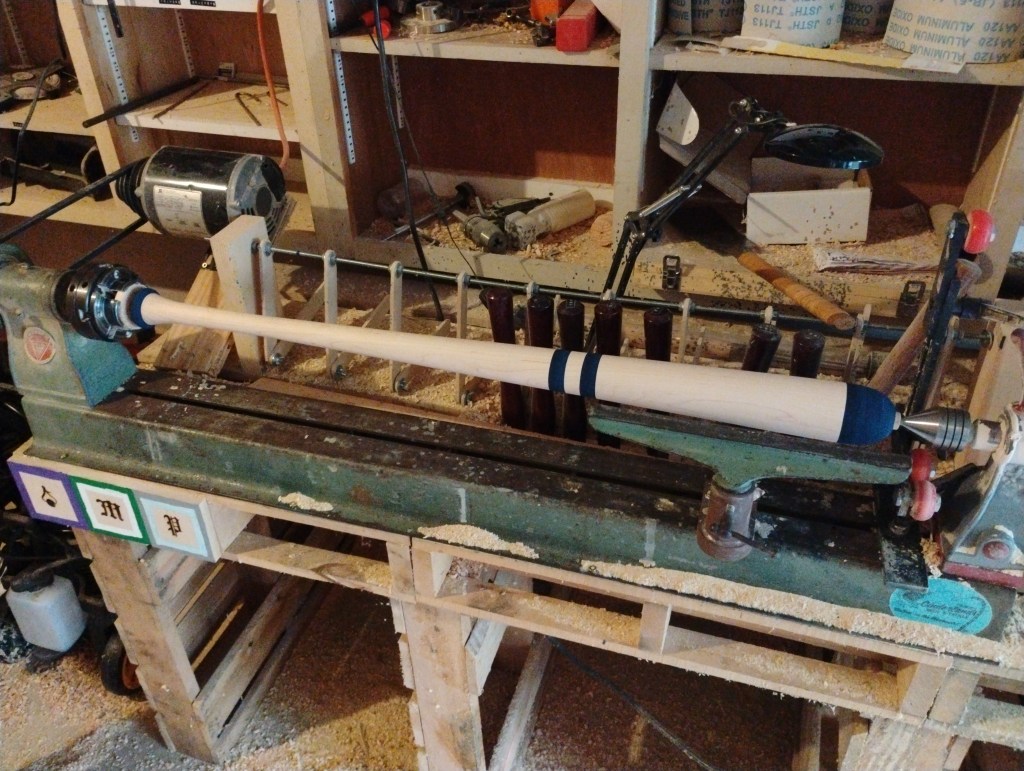
Step four is to rough out the overall shape of the bat. I use a measuring device called a caliper and a cutting tool called a parting tool to make sure I have cut each part of the bat to the proper diameter before removing all the excess material with a tool called a gouge. This will happen at multiple points throughout the process to get as close to the drawing I can.
Step five is a weight check to make sure the bat is close enough to the target weight to proceed. Since wood is a living thing, there could be significant differences in the weight of a blank from tree to tree, and if a bat is too heavy or too light it could become something other than what the customer ordered. If too heavy, I’ll trim until I meet the required weight, and if too light I’d repurpose it as an off-the-rack item to sell at a festival and start over with a new piece.
Step six comes when I’m satisfied with the dimensions and weight and consists of sanding the surface down to a smooth finish and cleaning up any transitions between different features of the bat. I typically use only a coarse and medium grit sandpaper as too smooth of a surface will inhibit adhesion and absorption of the paint and finish coat.
Step seven is what most people would consider the most important, and that’s the paint job! Just because a bat is supposed to be vintage doesn’t mean that it has to be drab. I carry a full range of dyes and stains offered at no extra cost, so I’ll always encourage a customer to have some fun with it. Probably the most interesting paint job I ever did was for someone who calculated and designed a striping pattern that was their nickname translated into binary!
Finally, I’ll add my finish coat for protection and weatherproofing. Once it dries it’s ready to be delivered! I can turn out the shape of a bat from the wooden blanks I use in about 2 hours, but layers of stains and finishing coats can take up to two days to dry.
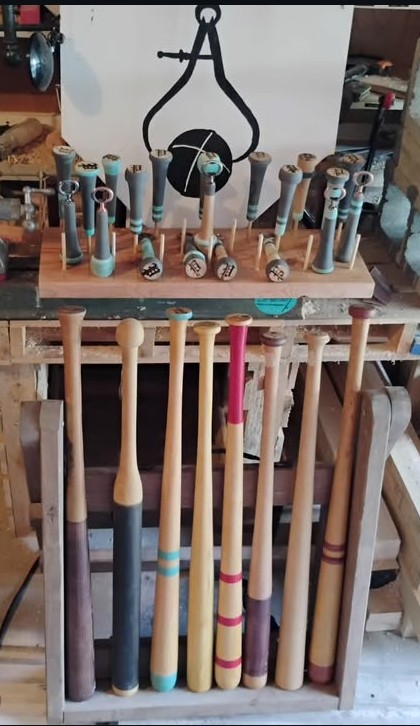
Are you allowed to put your logo on the bat anywhere? Usually, you see the manufacturer’s logo on the barrel end of the bat.
Tradition dictates that the makers mark goes on the barrel, but it’s been the topic of some debate over how “vintage” that practice is. As for myself, I put my makers mark on the flat end of the handle or (if flat) on the cap of the bat. I don’t know of any other manufacturer who puts their logo exclusively on the ends, but I prefer the cleaner look and I find I get a more consistent result. In keeping with the spirit of the times, I use a torch-fired branding iron instead of a sticker, foil, or stencil that other manufacturers may use.
Is there a stock of bats for players to choose from at Smokeshow Woodworking or is each bat made to order?
I carry limited stock to sell at the festivals I go to, but my bread and butter is custom bats, designed exactly to the specifications that the player wants. With my own difficulties finding custom work, I made the choice to specialize in this and try to use my engineering background to benefit the vintage ball community as a whole. As a player myself, I understand there’s a big difference between finding a bat that’s good enough and finding the perfect bat so I try to make sure my customers get that perfect bat feeling every time.

What is the best way(s) for folks to get in contact with you about placing a bat order?
I can be found on Instagram (@SmokeshowWoodworking1864) and Facebook (Smokeshow Woodworking), so send a DM on any of those platforms or an email to me at Smokeshow1864@gmail.com and I’ll be happy to get you started!
Huge thanks to Nick and Smokeshow Woodworking for their incredibly detailed answers and responses to my base ball bat questions. Smokeshow Woodworking is an approved vendor of the Vintage Base ball Association. This was a really fun email to read and I hope you enjoyed our Vintage Base Ball conversation as much as I did. Make sure you check out Nick’s work on social media and please email him at smokeshow1864@gmail.com with any follow up questions from this article.
Discover more from The Baseball Storyteller
Subscribe to get the latest posts sent to your email.
 The Baseball Storyteller