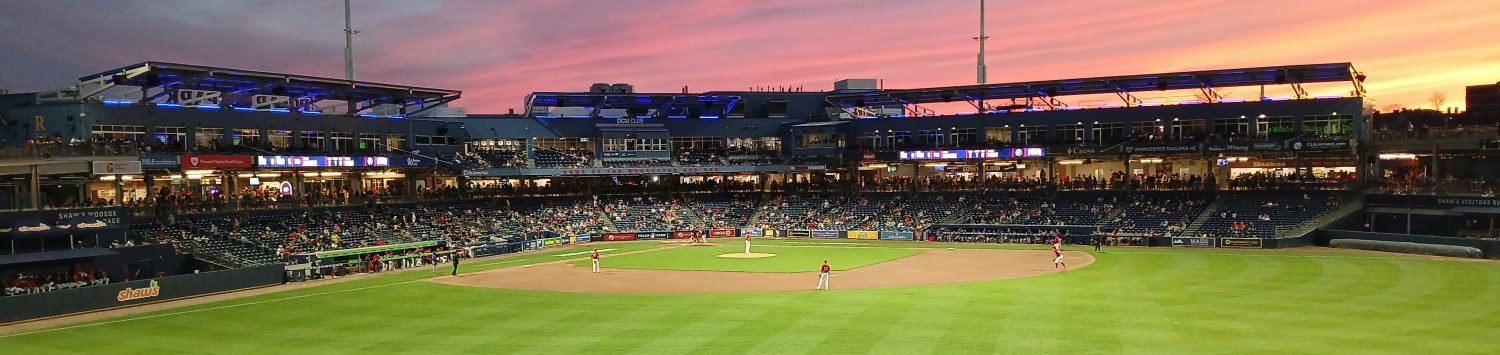
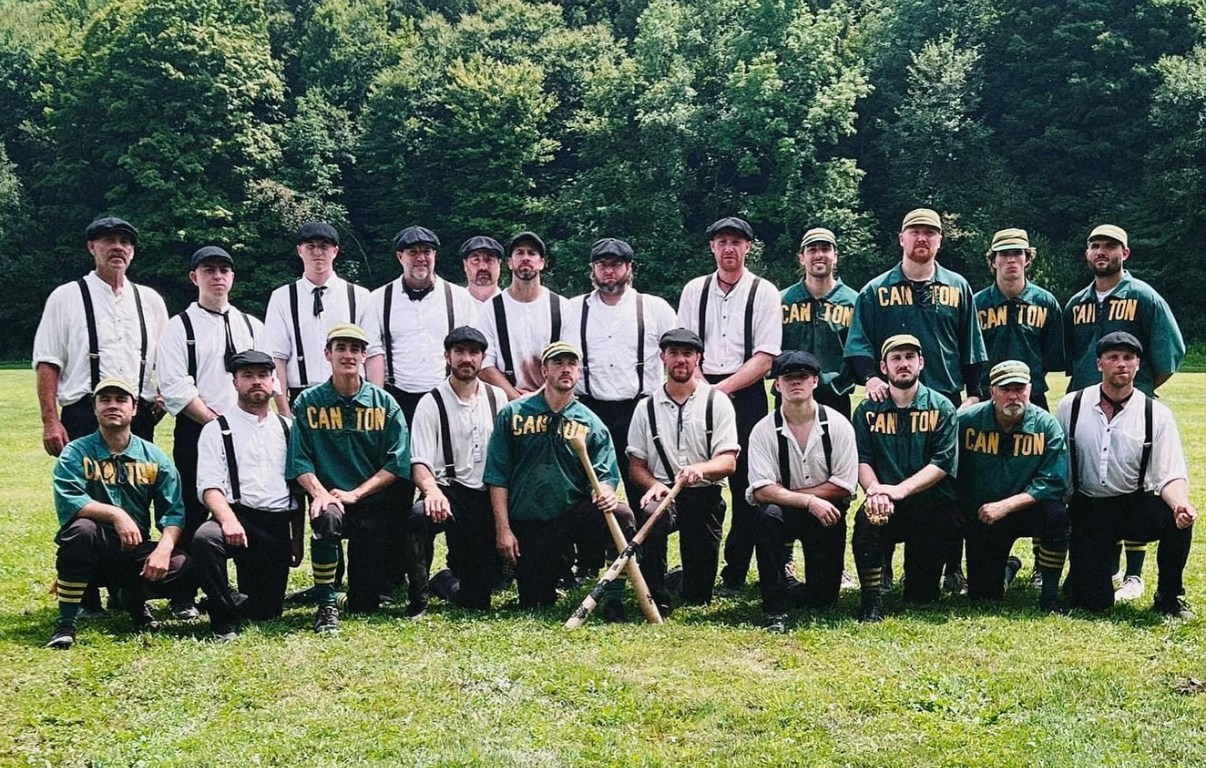
I continue my journey, my experience, my exploration into the fascinating world of Vintage Base Ball. It is a wonderful community of baseball and base ball fans, players, vendors, and great storytellers. There a ton of Vintage leagues and teams who post content like upcoming games, events, and positive photos. Like this link, promoting an upcoming event in Rising Sun, Maryland – NAHBBC, The National Championship Tournament. For those of you keeping score at home, that acronym spells out the National Association of Historic Base Ball Clubs and that exciting tournament is taking place this weekend, September 20th and 21st.

On a Vintage Base Ball vendor page, I was able to find and make contact with a baseball vendor named the Hanford Base Ball Company and a base ball player named Marbles, aka Mike Fini. I sent Mike “Marbles” Fini a number of questions about the Vintage Base Ball community he thrives in and he got right back to me via email with some amazing insight on the game and the equipment. And why the Vintage Base Ball community continues to make a positive impact in the lives of just about everyone it involves. Here is some of my email conversation with Marbles, aka Mike Fini:
In researching Vintage Base Ball leagues and teams, I have discovered that it’s not just the uniforms and the equipment that is period specific. The player’s vocabulary, the way they celebrate a good hit or a strikeout, nothing must resemble a modern player’s demeanor. So, in keeping with this, does the Vintage Base Ball world have period specific baseballs that they suggest to players?
Marbles – Vintage Base Ball does have period specific base balls. In today’s game, baseballs are stitched together with two separate pieces of leather in a “Figure-8” style pattern. In the 1860’s it was one continuous piece of leather, stitched with an “X Pattern” and frequently referred to as a Lemon-Peel Base Ball.
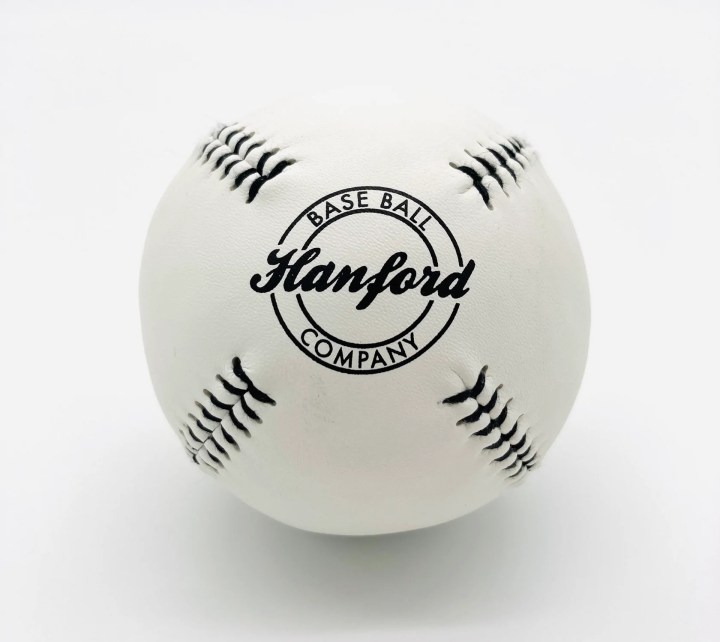
Marbles – The baseballs in the 1860s that were used had the specifications that made them roughly half an inch larger and half an ounce heavier than today’s baseballs. The balls in the 1860s would have been hand wound, with a rubber core in the center, covered with yarn and then the outer layer being a leather. Due to the way these base balls were created, they would often softed up a bit as the games went on and the balls were smacked around, and they wouldn’t be as compact or hard as the baseballs today seen in the Major Leagues and Professional Level. The MLB often switches out baseballs every couple pitches, where a ball in the 1860s would typically be the one ball for the game.
What kind of materials make up a vintage base ball? How true to the original process of making baseballs is your process?
Marbles – A rubber core, yarn, string and leather make up a vintage base ball. We use materials that are represented and explicitly outlined in rulebooks and guides of the time period such as Haney’s Base Ball Book of Reference. We have found that players in today’s era, even when playing historical baseball, often prefer consistency in their base balls. While the process is done by hand from time-to-time, we’ve been able to manufacture baseballs relatively similarly to the hand created process with modern technology providing a base ball that is consistent to play with in competitive games. When hand winding a baseball is done, it’s tough to be consistent even through just myself, so different clubs having similarly looking balls created by different makers, can have a very different playability to them.
Does this ball travel if struck well?
Marbles – The baseballs still travel very well. It wasn’t customary in the 1860s that the Home Team would bat second. Instead a con flip would be conducted and the winner of the coin toss would choose whether they’d like to strike the ball first or take the field first. By today’s strategy, taking the field last, and having the second at-bats, seems to be the competitive advantage. However, with a base ball that softens up a bit as the game goes on, there was some strategy to strike the ball first, when it was at its hardest, and may go slightly further.
Looking on your website, I see several hat options labeled “pill hats.” What exactly is a pill hat?
Marbles – The Pillbox Style of hat is a very common style of hat that was more popular in the 1880s, but is commonly worn by many clubs that participate in 19th Century Base Ball. Those hats are a bit more cylindrical with a flat top and rounded sides, resembling that of a Pill Box or Pill Container. For Base Ball, they’re often matching the clubs uniform colors, featuring one or two stripes across them.
Also, I see a number of trading cards on your site and one that features yourself, “Marbles” in Vintage uniform. Do you play and for whom?
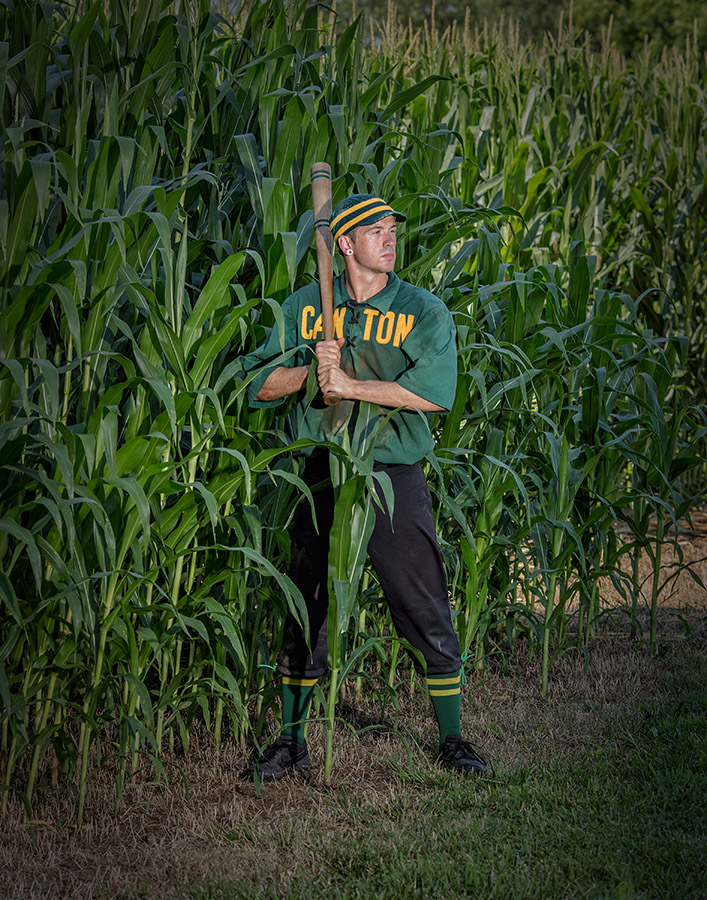
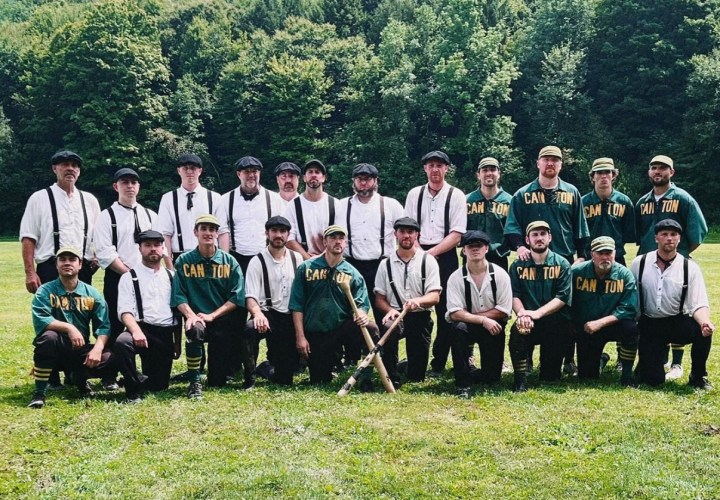
Marbles – I have been participating in Vintage Base Ball since 2014, and just wrapped up my 12th season. I’m the captain of the Cornshuckers Base Ball Club out of Canton, Michigan. I began playing with the Walker Tavern Wheels in 2014, which led to starting the Cornshuckers in 2016. I also play games for the Lah-De-Dah Base Ball Club of Greenfield Village and any other club looking for a player to help out when my schedule allows it! I was able to spectate vintage base ball from a young age at Greenfield Village/The Henry Ford. I began attending games in the early 2000’s as a kid that had a much higher interest in baseball than history. Being dragged along to historical museums isn’t always the most thrilling experience when you’re 7 or 8, but the historical base ball was something I could connect with. So even though I’ve been playing for a dozen years, I’ve been aware of and around the game for closer to 25 years. I’ve played baseball my entire life, but never really at a competitive level. I participated in Rec Base Ball from T-Ball up through 18-U in the city of Canton. Other hobbies such as professional wrestling, and also having jobs in High School didn’t allow me to have the time to be able to commit to playing for my High School, even though I was selected to play on the Freshman Club my first year when I had tried out. However, in the vintage community, I’ve played with guys that hadn’t picked up a bat until adulthood, and some that have played at some degree in college. The vintage base ball game truly allows people who share a love of history and baseball to come together.
In your experience as a player and vendor, what do you feel is the major draw to Vintage Base Ball?
Marbles – I think a main selling point of vintage base ball is the difference of the game, with no gloves being what sticks out most to spectators. We’ve heard complaints for years that modern baseball is “too slow” and “too boring” from members of the general public. While I don’t necessarily agree with those claims, I think that a faster paced game, in which the spectators can also learn something new about the rules, and the history of the game is quite fascinating. I think it’s a main reason Banana-Ball has been so successful, and also a reason that historic base ball gets spectators for its events as well! Being able to have differences that can add excitement to every play I think adds value to the people watching the game. Whether that difference is a backflip in banana ball or taking the gloves away in vintage base ball. While we’re not out there doing tiktok dances between pitches, the fact that anything can happen even on a routine pop up (especially since there’s no in-field fly) keeps it interesting!
As a vendor those large events are always exciting to be a part of! It’s great to see the community get together for a weekend of festivities. As far as major events, Frankenmuth Festival was my all-time favorite although no-longer in existence. The Portage Vintage Base Ball Festival is a wonderful time in Western Michigan and out east The Rocky Point Base Ball Festival and Gettysburg Festival are also great events to check out where there’s a lot of good base ball and good times to be had!
What is/was your favorite field to play on during your Vintage Base Ball career?
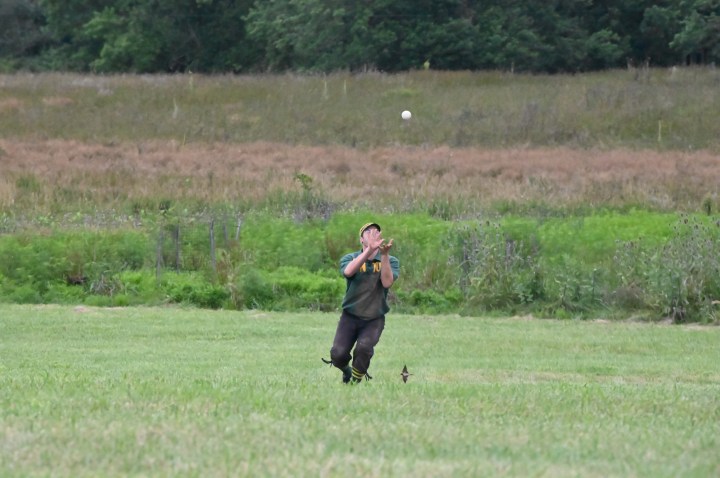
Marbles – One of my favorite parts of vintage base ball is getting to play on fields that have far more character than anything you’d see today. Playing on these fields reminds me of playing Sandlot Style Baseball growing up. Sometimes there was a tree in Centerfield Field, or maybe bushes deep in left. These days, I frequently get to play on a field that has a train running through Right Field! It’s hard to narrow it down to just one field, after playing over 500 games in the last 12 years, but Dan Lyon Field the home of the Cincinnati Buckeyes and Red Stockings, always sticks out near the top! Stan Hywet Hall and Gardens in Akron and The Gold Bowl at 9,700+ ft elevation in Victor Colorado are also near the top of that list!\
Huge thanks to Mike “Marbles” Fini of the Hanford Base Ball Company and the Canton Cornshuckers. His vast experience as a player, vendor, and community member was just so interesting to learn about. I loved reading about the base ball process and how his great memories of playing the game. Really great stuff, Marbles, I thoroughly enjoyed your answers and your insight on this amazing Vintage Baseball Community.
If you would like to learn more about the Hanford Base Ball Company, here is more from Marbles – The best way to place an order is on the site, HanfordBaseBallCo.com. You can also reach out through email HanfordBaseBallCo@gmail.com or contact us through Facebook “Hanford Base Ball Company”
All photos in this article submitted by Mike “Marbles” Fini
Discover more from The Baseball Storyteller
Subscribe to get the latest posts sent to your email.
 The Baseball Storyteller