Growing up in Rhode Island, I was introduced to the world of sports cartoons as a kid reading the Providence Journal sports pages. Later in life, I worked with a pretty famous cartoonist, Frankie Galasso, on a number of his freelance projects. And one of the coolest moments of my baseball experience blogging was interviewing, through his son Peter, Robert Trondsen, the illustrator behind the Max Mercy cartoons we all know and love from the film, “The Natural.” It turns out, I’m not alone in my sincere appreciation for Trondsen’s work.
A short time ago, I received an incredible email from a caricature artist named Ryan Snarr. Ryan emailed me about my Robert Trondsen article, an caricature artist who was just so inspiring to him, and the beautiful sketches I included in the article. Ryan and I continued our conversation and it turns out Ryan Snarr is one heck of a caricature artist himself. You should check out his work, his portfolio, and his caricatures – you will not be disappointed. I will include his information at the conclusion of this article. Again, highly recommended. Ryan and I chatted via email recently about his motivations, his art, and what he does if he runs into that dreaded snag in creativity. His answers will inspire you, I promise you.
How much of your work is reproducing an image that already exists? For example a home run pose or a dive into a base after a successful steal?
Ryan – There isn’t one answer that fits all scenarios on this one. Sometimes I’ll try to recreate a piece by another artist to study their style. Recently I’ve recreated some illustrations used in movies that have stood out to me over many years. My recreation of those was to pay homage to the original art, but to also practice different elements of style or color in a digital format. When I was a kid, my aim was most often to reproduce an image to look exactly like a photograph. I’d graph the source image and then recreate it with my own graph on a piece of paper. It always felt good when others would say my creation looked just like the photograph. As an adult, I still use source images to influence a pose or a gesture, but I’m more interested in creating that in a way that reflects my style.
How much of your work is how you view the subject?
Ryan – I think it is safe to say that if I’m drawing something or someone, my view on the subject is that it is at least worth my time to study that particular thing. I have a YouTube channel with hundreds of sketch process videos. Each one of those topics I chose to draw was something I wanted to share with my children. Perhaps one of those videos reminded me of a favorite actor or a funny scene in a movie. Maybe it was a great athlete. Maybe it was an interesting face. Sometimes it is a combination of all of those things. I don’t try to get political or preachy in my drawings, but I do hope they add something positive to the world, and maybe give the viewer something to think about. Caricature work can be about making statements, but when I do a caricature, I’m mostly hoping to bring out a person’s personality or tell a larger than life story. I don’t necessarily love that professional athletes are adored as much as they are, but since they often accomplish larger than life feats it can be fun to portray them in a folk hero sort of way.
To further that discussion, do you start with one photo of an athlete or do you look over several photos and take bits and pieces from several photos?
Ryan – When doing a caricature portrait, it is good to have several different source images of the person. Sometimes one image is used to model the sketch and sometimes all three influence a portrait that isn’t a direct reflection of any of the source images. After collecting source images, it is good to do some quick thumbnail sketches that might exaggerate or simplify some of the features. I aim to select an approach to the caricature from those explorative sketches that aligns with the story that I’m hoping to tell in my sketch.
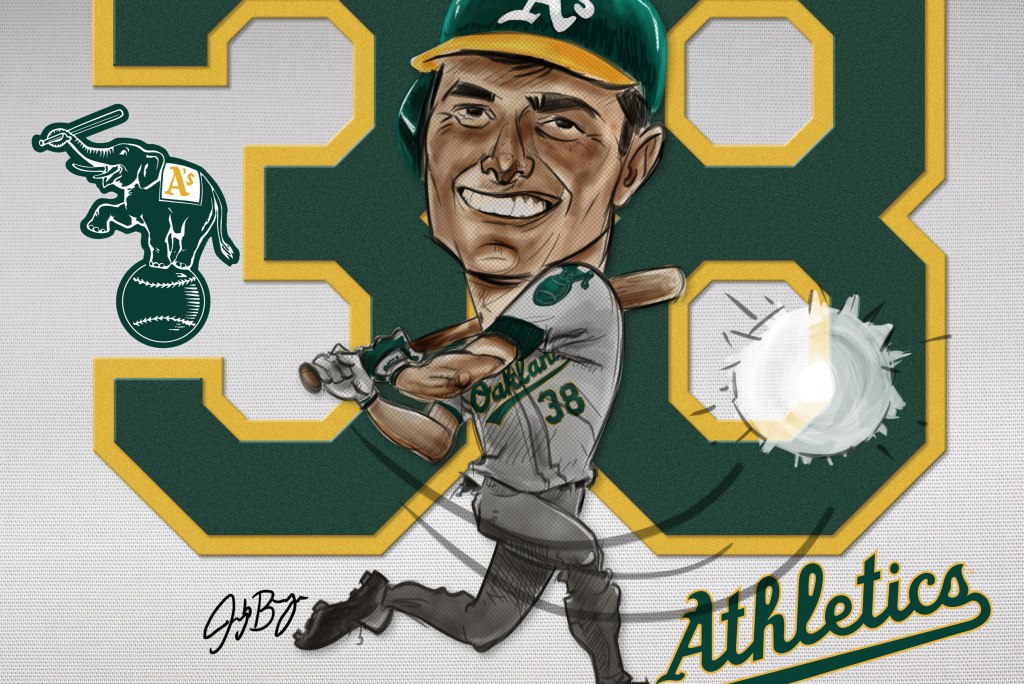
Does a sports cartoonist focus on any specific features of the athlete for their work?
Ryan – In most circumstances for me, my athlete caricatures will be big headed with features that accentuate their abilities. This helps put emphasis on their face and signature facial expressions. The rest of the body could be exceptionally lean with abnormally large feet or hands for a basketball player, or abnormally large forearms for a baseball player. Each of these details provides clues to the viewer as to who the subject is and what their strengths are. Uniform colors, tattoos, or signature moves provide additional frosting on these caricatures and further endear them to the viewer.
Is it customary to embellish certain features of the athlete, like their biceps or teeth or nose or entire head, to make the cartoon really stand out?
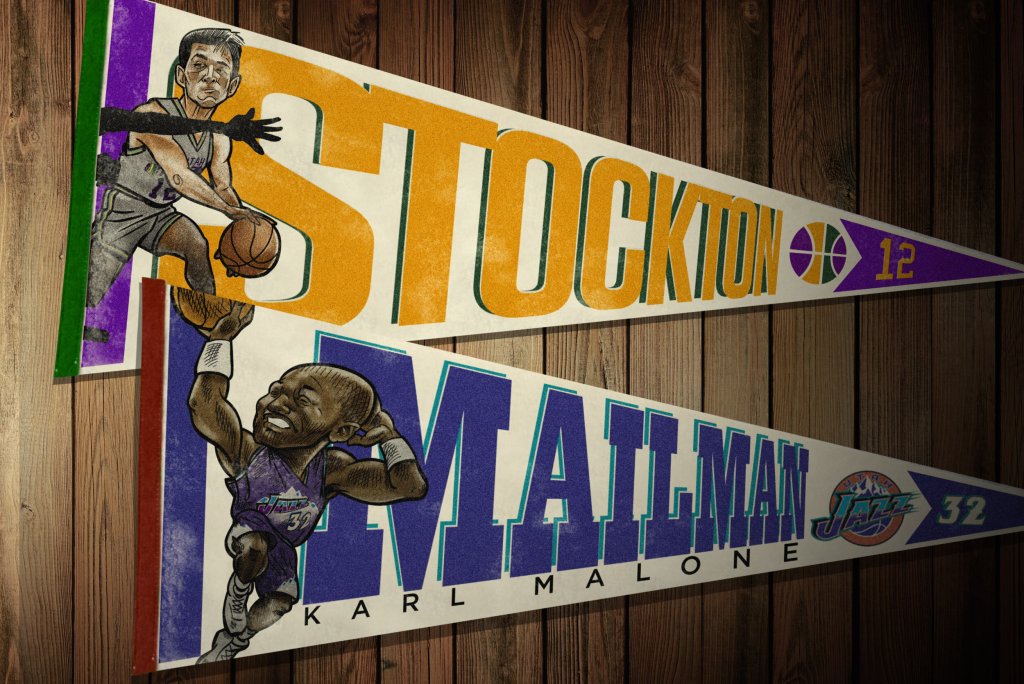
Ryan – It is my main goal with a caricature to have the drawing quickly resemble the actual person. For me as a viewer, I love this style of art since it sort of leaves the job of recognition up to me—almost as if I’m in on an inside joke. Caricature art isn’t bound by anything (like anatomical rules), but it is fun to apply things you know about the human face and figure to embellish stories or give clues to a subject. To address the word ‘customary’ in the question, I would say that a big head is quite common in caricature art (unless you needed to make it small to accentuate another physical feature). The rest of the features can go in many directions to tell the story and you may apply things differently when drawing someone who is old vs. young, handsome vs. homely, male vs. female, etc…
Do you typically draw athletes that you are a fan of, or does that matter in who you draw?
Ryan – I am drawn to stories (pun intended) that I think are worth sharing. Maybe I’m drawing an athlete I’m not so much a fan of, but he/she is the villain in a story I’d like to share. Sometimes I will draw an athlete that celebrates a moment. Addison Russell and Freddie Freeman are two examples of that. I drew each of those following their World Series grand slams. I love that accomplishment since it seems like every kid’s dream in some form or fashion. I’ve drawn a number of caricatures of athletes that I’m a fan of, but sometimes I’ll do one because a friend of mine is a big fan, or because the person is newsworthy for some reason.
On your website, you have a section entitled, “Top of their Game.” How did these athletes end up in your rotation to draw? I see a lot of hometown heroes there from the Utah area, your home state.
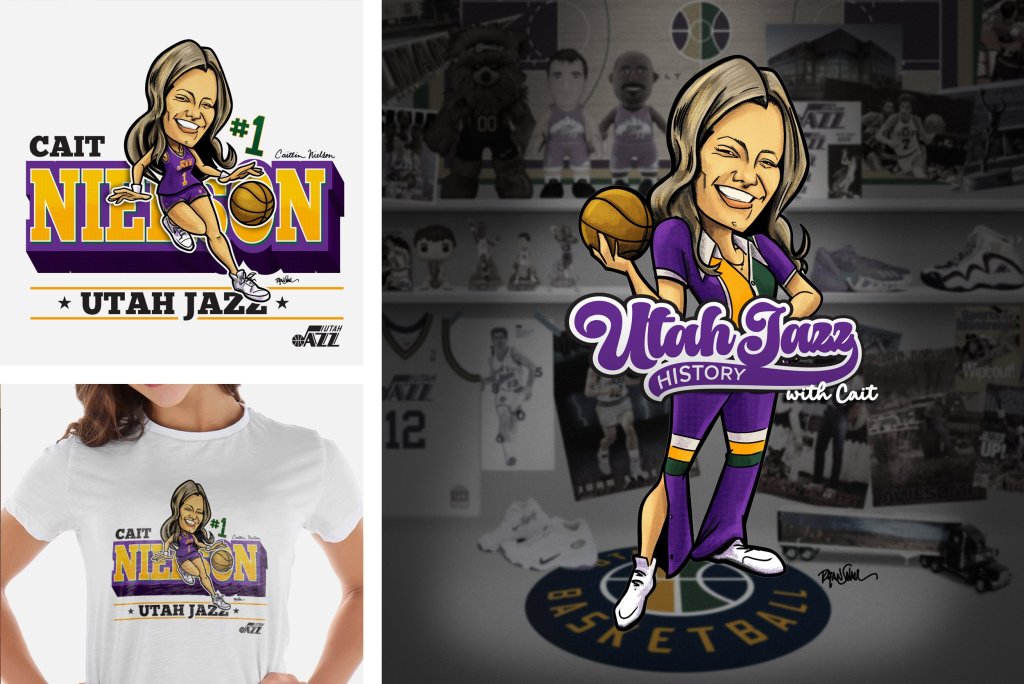
Ryan – I do enjoy celebrating folks that have Utah roots. I grew up a huge Jazz fan in the Stockton to Malone era. I enjoy seeing guys go from Utah colleges to the professional leagues. Whether I’m a huge fan or not, I enjoy celebrating these big personalities with other Utahians. I’m not much of a Zach Wilson fan, but it was sort of neat to think of a kid that grew up nearby who was drafted to play in a huge sports market like New York. One of my favorites in that group is the Roy Hobbs illustration. I enjoy many of Robert Redford’s movies (he was once a relative through his first marriage to Lola Van Wagenen), and Roy Hobbs is the Paul Bunyan of sports heroes (at least in the movie. I understand in the book the movie was based on Roy Hobbs actually strikes out at the end).
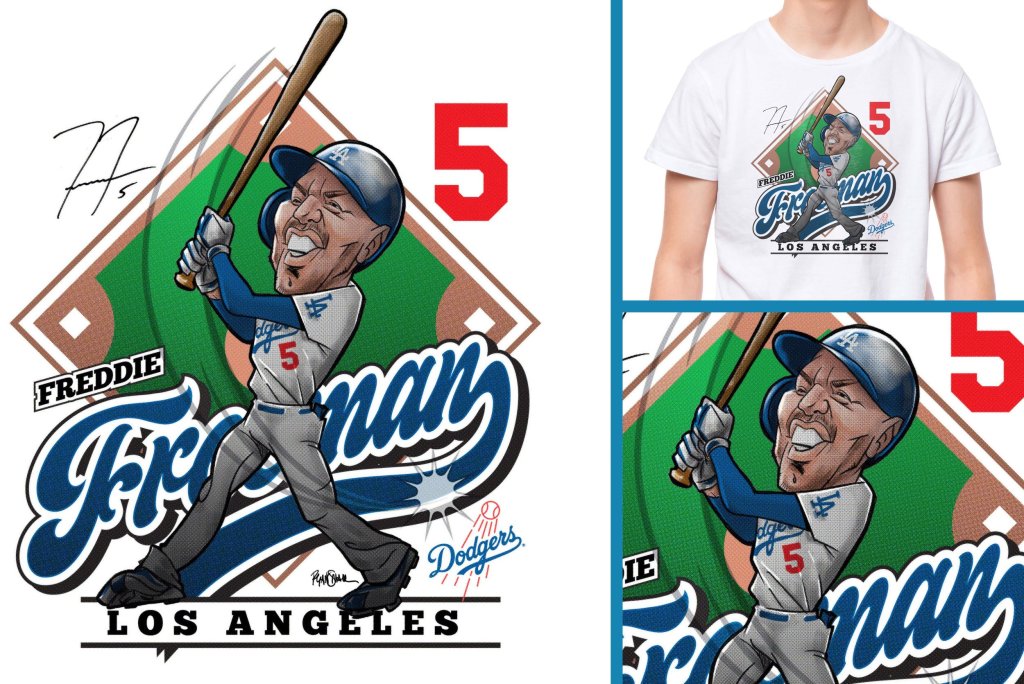
The Freddie Freeman piece, just how far did he hit that one??? I see his hips are turned and full extension on the follow through. Great representation of a textbook swing. How did you come up with the idea to draw Freddie?
Ryan – Freddie Freeman has seemed to me to be a real decent fellow. A family guy. A great teammate and team leader. He has the qualities I’d want my boys to look up to. As soon as he hit the grand slam in the last World Series, I began preparing that piece. That is the stuff dreams are made of. I studied footage and photos of his swing for that one. I took cues from many different images to land on a face and a pose I thought would work for the composition. The overall style I went for in that piece, and many others, is the old Salem Sportswear caricature t-shirts. The late Bruce Stark created some iconic caricatures back in the day as did others like Alan Mudgett. I couldn’t get enough of these shirts and owned several of them.
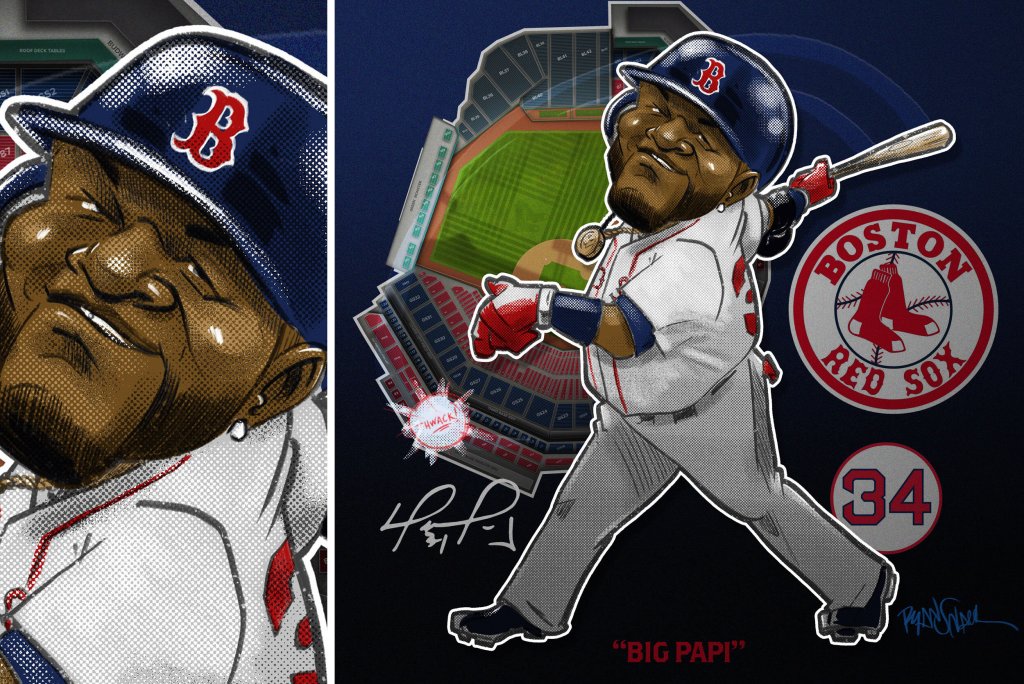
You have to know David Ortiz would be brought up. Nice work on Big Papi, by the way. What features about David stood out for you as you were researching this piece?
Ryan – The Big Papi piece is a fun one. He’s got such a big personality and he’s got a great smile. With baseball players I really hope I’m capturing something unique to them. They all swing the bat differently. If I get that wrong it creates dissonance with the other clues about the person. The earring, the necklace, the elbow pad are all meant to help the viewer recognize the person. The number isn’t super visible on the jersey, but in this case, adding supporting details in the background like Fenway park, #34 and the team logo make for a fun background.
How do you navigate the MLB licensing thing? Do you have artistic freedom to draw an athlete, with his team’s logo, etc?
Ryan – All of the caricatures that I do I consider fan art. Since I’m not mass producing them or even selling them, I’m not worried about licensing. Having them in my portfolio demonstrates my ability to draw caricature and to be a visual storyteller. If I was to get a commission to sell anything in mass that uses a person’s likeness or represents a team entity, I’d build into the scope of that project all licensing considerations.
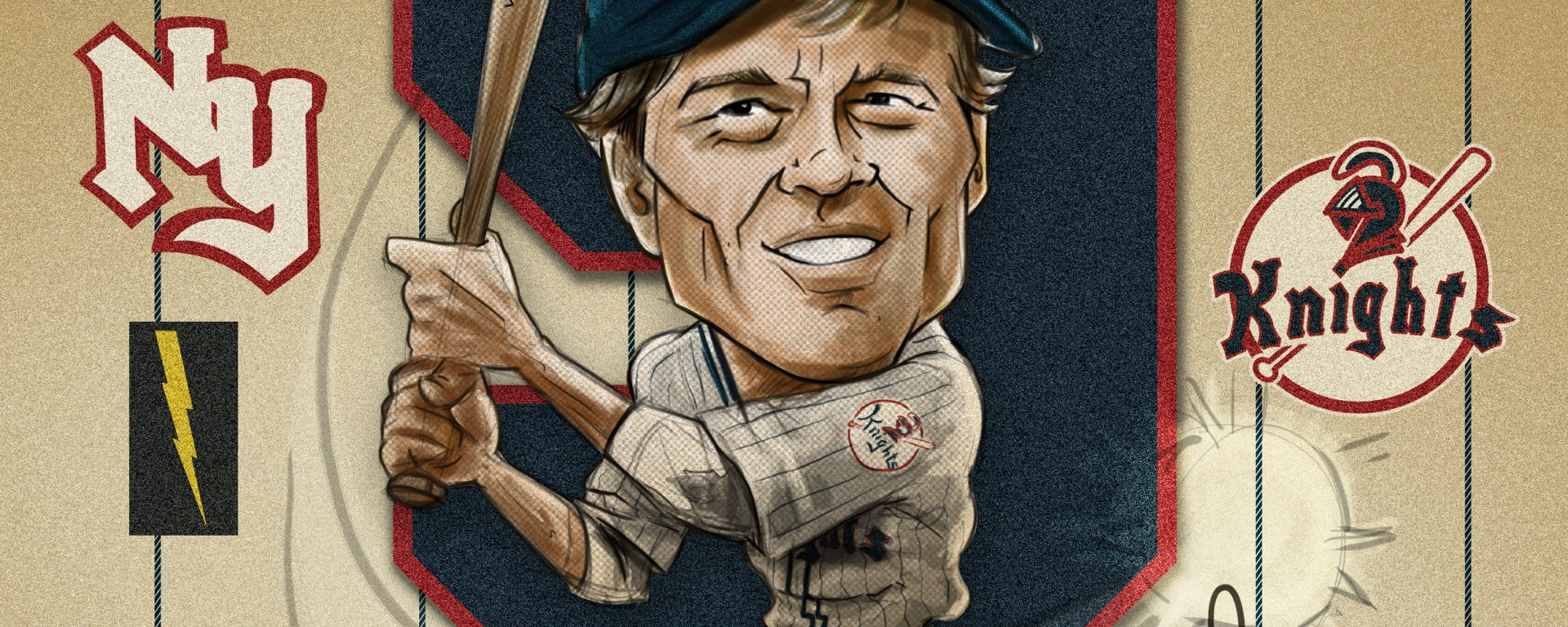
I love the Roy Hobbs piece. Another left handed slugger – that makes three for you Ryan, I approve. (I batted left-handed myself). What features did you want to stand out in the Roy Hobbs piece?
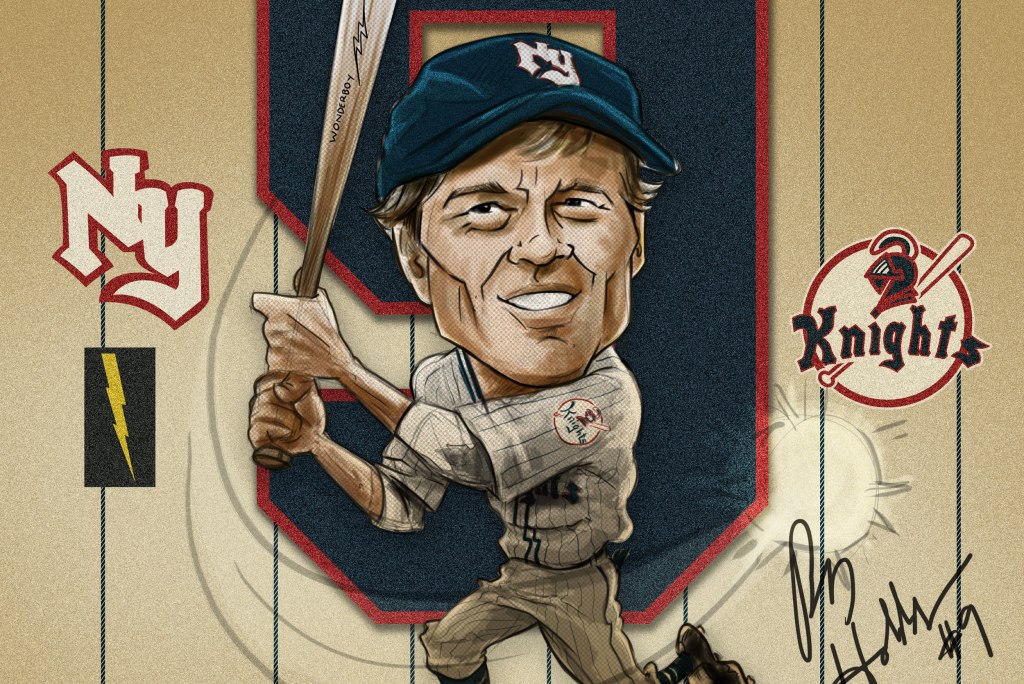
Ryan – I’m a lefty as well which I think was one of the things that made me love The Natural. I wanted to include all of the cool details from the show: The fictitious NY Knights branding, Wonderboy, and his number 9. I wanted that one to have a vintage feel within the caricature style so I made the colors look aged and muted. I also chose to leave in the layer of rough sketch marks on this one. As I look at someone’s art, I love to see the evidence of the rough lines that were used to block in a drawing. It reminds me that there is a lot that goes on behind the scenes to make it to the big stage and hit a home run.
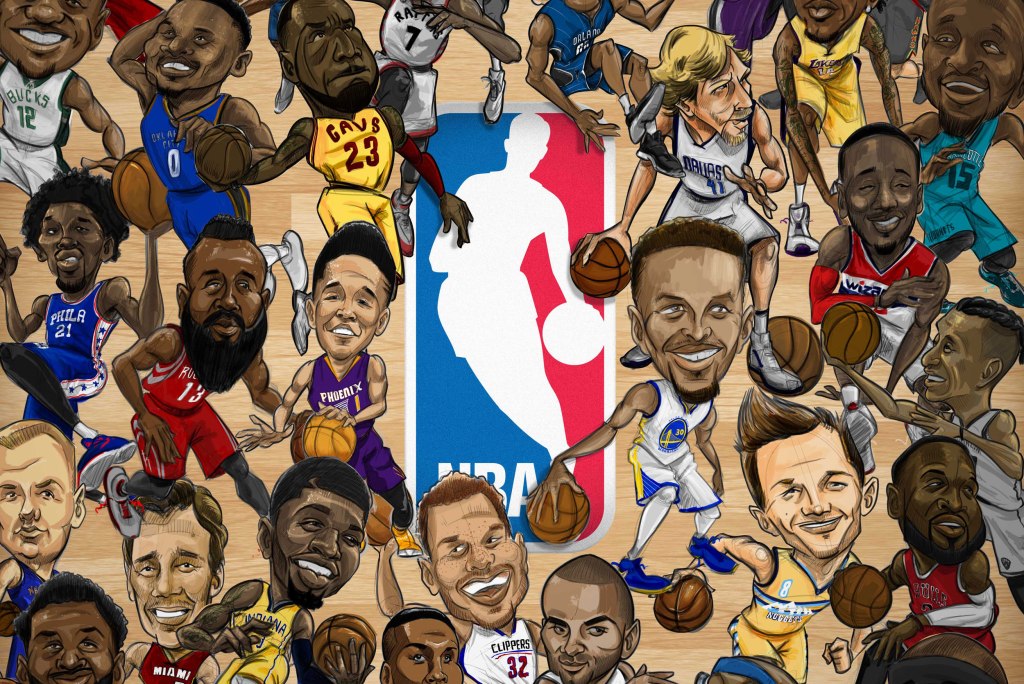
Okay, you have a huge NBA legends piece in here that I love. Of all those legends, who are you choosing to take the last shot in a championship game???
Ryan – The legends collection is a fun one. It started with a personal challenge to do a large caricature series. I chose to draw a prominent or favorite player from every NBA franchise. No sooner did I finish it, several of the players began to get traded. There are only 3 players in that whole set who either still play or are with the same team. In terms of who should take the last shot, I’m taking Damian Lillard. Not only has he hit some amazing last second shots, but his victory stare down is my favorite.
What motivates you to be creative?
Ryan – I believe that we’re all here to create. I’ve happened to get attention throughout my life because my creativity can be represented visually for many to see over time. It’s not like an athletic performance that is gone after it happens (if it isn’t captured on film). The creative output I give to the world is so much about processing things that already exist and reimagining them in a way that tells a story through my unique lens. I like to tell humorous stories, human interest stories, overcoming odds stories. I’ve explored different creative ways to share my personal story as well; from sketchbooks, to poems, to maps, and videos. Running a business is all about storytelling—It’s the story that inspired the business and how that aligns with the individual stories of a customer base. Creating compelling stories can inspire people, can change people and can help people. I like to exceed the expectations of others through creativity. That leads to me making connections with others which is something I really value.
A clear tie into baseball on this topic is the idea of hitting a home run. I use that phrase all of the time when I’m seeking an ideal outcome from a connection that I’m trying to make. I like to be in a job where I feel like I hit home runs regularly. The video link below is a video I created from an afternoon at Smith’s ballpark a couple of years ago in Salt Lake City. We had a company field day on the field. I was looking forward to hitting balls on the real field for weeks and was massively disappointed when I missed every single pitch once I got my turn. I always considered myself a decent hitter (especially from a machine), but on this day my timing was way off. On a second turn at bat, I decided to take a couple of bunts to dial in my timing so I could finally connect with the ball. The home run finally happened with the right connection and it felt and sounded amazing. Hitting home runs (literally and figuratively) also motives me to be creative. Those experiences turn a black and white experience to full color.
What motivates you to be creative when you hit a snag in your creative day?
Ryan – Sometimes looking at a blank page can be daunting. Time set aside for creative exploration is very valuable and can be hard to come by with a busy schedule. I like to have lists upon lists on hand of subjects I’d like to tackle or styles I’d like to explore on hand so that I’m never looking at a blank page for too long. Making time to create is invigorating and I think that is what motivates me to keep going. There is nothing like having the spark of an idea that quickly turns into a flame. I’ve had creative thought come at me so fast while beginning a project that I wasn’t sure if I could write fast enough to get it all down on paper. It’s almost like a pathway opens up from some fountain of creation that chooses you to be the conduit to bring a specific idea into the world. That is exciting to me.
What is the best advice someone gave you, from the world of cartooning, that you still adhere to this day?
Ryan – The best advice I received regarding my art was to not take it for granted. This isn’t something you can put on the shelf to collect dust for a while and expect to pick up where you left off. If you want to be good, stay good and move forward in your art you have to continually sharpen the saw. You have to put in work just like a Steph Curry or a Michael Jordan in the gym. You have to stay curious. You have to ask questions. You have to test your discomfort. It is also extremely important to warm up just like an athlete would. I’m not the best at warming up as an athlete and I could certainly improve my warm up as an artist, but this helps tremendously. For much of my life, I thought my ability to draw was just God-given talent; I could pick it up and use it whenever I wanted and I could set it down for any length of time and not lose anything. Not true. For the last 10 years or so, I’ve really made an effort to be continually creating and keeping those physical and mental muscles conditioned for great creative output.
For more information on Ryan Snarr, including more of his impressive portfolio, head over to his official website – www.ryansnarr.com. On Ryan’s website, make sure you connect with him on social media and view his online store of T-shirts, books, and more. What an impressive guy, this was a real honor to interview him. Ryan, thank you and best wishes to you and your family, your business, and please let’s stay in contact!
Discover more from The Baseball Storyteller
Subscribe to get the latest posts sent to your email.
 The Baseball Storyteller