Before you go there, take your head out of the sewer. This is a family blog and there will be no swearing or sexist comments or anything derogatory towards race, religion, creed, or person. This A to Z challenge is baseball terms you might here in the dugout at a local Little League park or at my beloved Fenway Park. I’m keeping it clean, I promise. This Day 3 challenge follows A To Z Challenges for Ballparks and BoSox players, so if you are so inclined, message me with any terms I may have missed. Now let’s hit the ground running and get through this baseball terminology alphabet challenge:
A – Altogether now, 1, 2, 3 Team – the team gathers before a big game, then in the right field grassy area after a tough defeat to chant 1, 2, 3 (insert team name)
B – Be a rock back there – coaches yell this out to their catcher in the hopes another passed ball does not occur, this time especially because the winning run is leading off third base
C – Ceremonial first pitch – the pre-game first pitch of the game, usually by someone having no business throwing a baseball but important to the community
D – Don’t let the ball play you – many coaches will yell this out after a baseball has played a player
E – Everyone move back – the big kid is up at the plate and the outfield fence area is about to get crowded with defensive players
F – Fastball count – for me, this was any count. I loved hitting fastballs. Off speed stuff, eh, not so much.
G – Get outta here baseball! – Coaches, players, fans, family rise as the baseball rises into the night towards a landing spot on the other side of the outfield fence. With some verbal coaching, does the baseball comply? Sometimes, yes.
H – Homefield strike – a local umpire with a generous strike zone for the local, hometown pitcher. Questionable does not begin to define the homefield strike calls.
I – In the gap – in other words, we the fielders ain’t. Gap hitting is through the space between LF and CF or CF and RF.
J – Just throw strikes – a struggling young pitcher will throw a lot of pitches, and most of them are out of the strike zone. This is more of a plea than a coaching term. Short translation, let’s move the game along any way possible.
K – Knuckler, Knuckleball – a tricky pitch to learn, but what a weapon if you can perfect it just a little bit. The ball literally dances in the airspace from the mound to the batter’s box.
L – Let’s get 2 infield – Coach reminding players that there is a runner on first base, and that 2 outs would be great since he has already had a long day.
M – Middle infield at double play depth – A defensive alignment usually accompanied by having the corner infielders play in for a bunt.
N – Neighborhood play – old school method of turning a double play at second base wherein you pivot over the top of the base, do not actually touch the base, yet still receive the benefit of an out call by a nearby umpire.
O – One base at a time – usually uttered by a coach or manager when your team is down 2 touchdowns in a baseball game, and its just the 2nd inning.
P – Popcorn – a seemingly easy to catch fly ball to any position fielder, usually an outfielder though.
Q – Quisenberry – a side arm pitcher who resembles the late, great Dan Quisenberry of the Kansas City Royals.
R – Running on everything (2 outs) – With 2 outs in an inning, just about every runner on base should be running as soon as their league rules allow.
S – String, as in “pull the string” – a really good curveball, as it was taught to me, is thrown with this pull the string method. Meaning the motion resembles pulling the string of a lampshade, straight down, to help make the curveball do more damage.
T – Throw through catcher – With runners on first and third, some teams will elect to send the runner from first to get the catcher to throw to second, then the runner from third takes off for home. Some coaches just want/need an out, so they will instruct the catcher to just throw through to second and attempt to get an out.
U – Up on your toes, not back on your heels – standard ready position for any fielder, no matter where they are in the infield or outfield. Toes is player ready, heels is disaster waiting.
V – Visit to the mound – a coach or manager will call timeout to visit the mound for a pep talk or to replace the current pitcher with another one
W – Warning track power – a player whose power is not quite enough to propel the baseball over the outfield fence. The baseball lands somewhere close to the fence and is caught by the awaiting fielder
X – X’d up or crossed up (reaching a bit here) – when a catcher calls for a curveball (a loopy, off speed pitch) and the pitcher throws a fastball (straight, fast pitch), disaster can ensue. A catcher that gets crossed up usually gets hit with the pitched ball or a passed ball ensues.
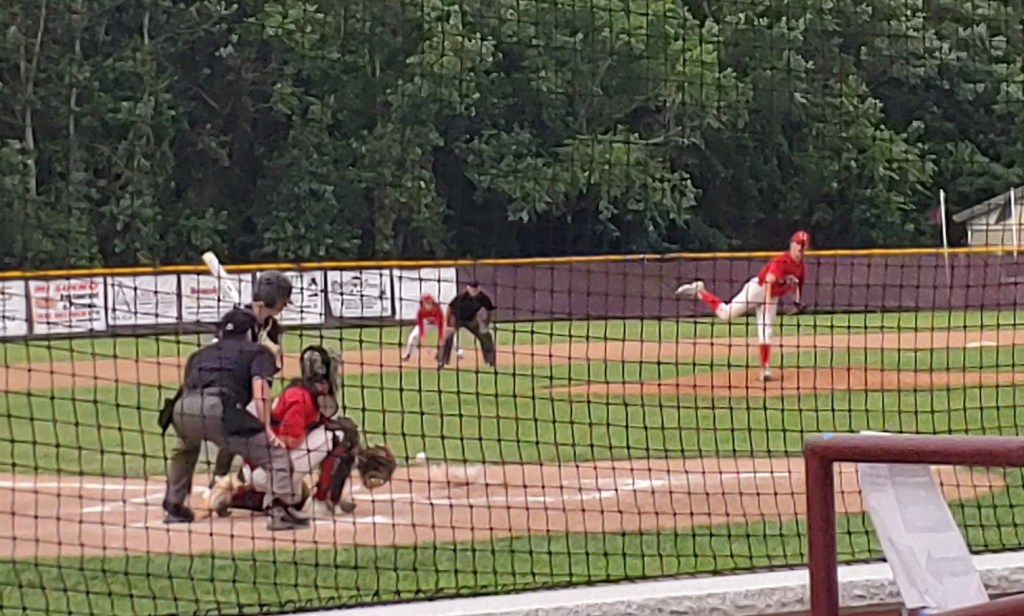
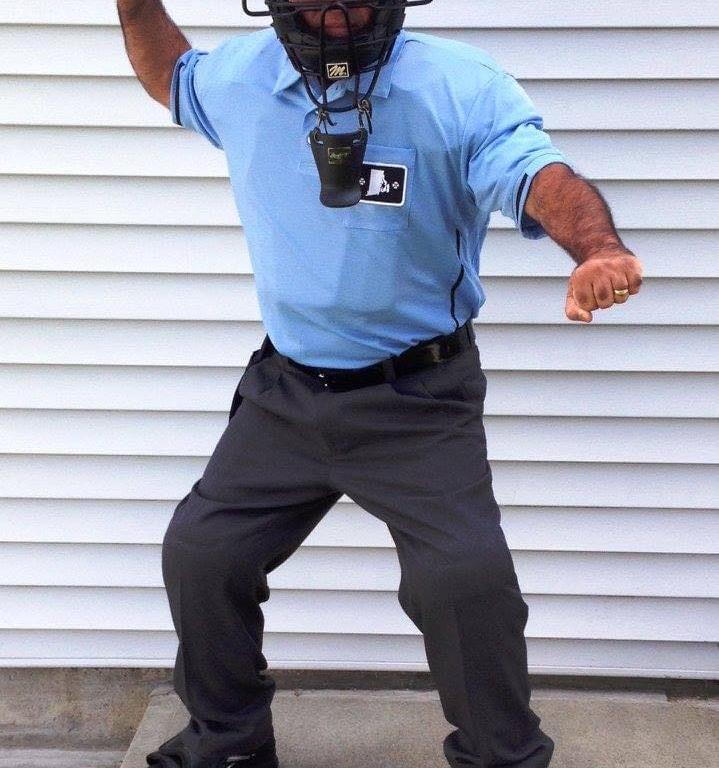
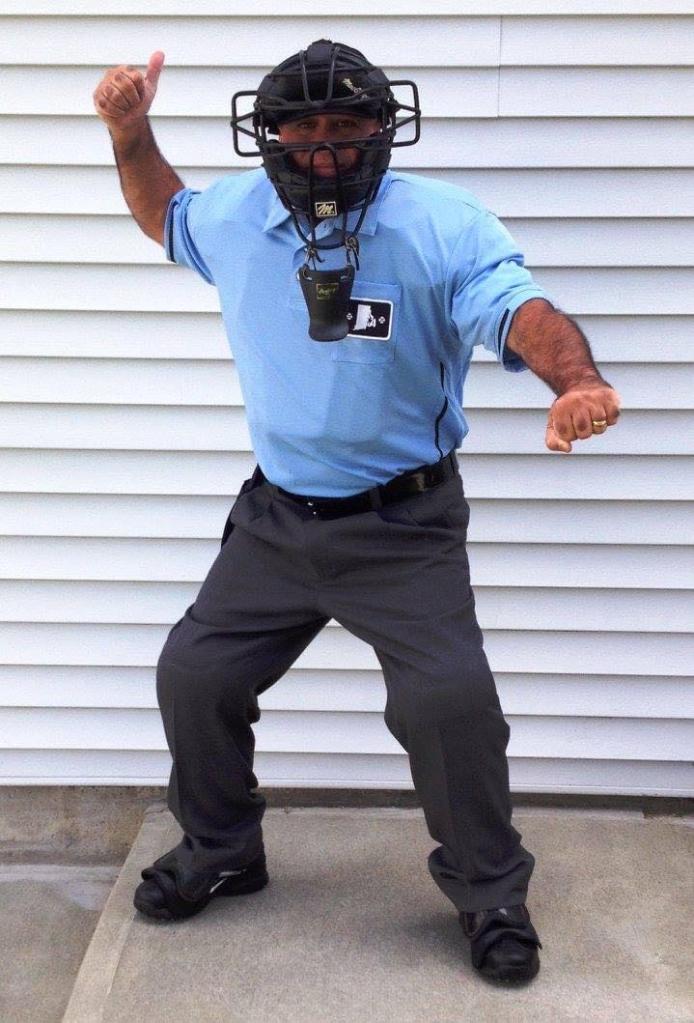
Y – Y’eeer out!!! – an emphatic strike 3 call or force play call made by an umpire. I have seen some really funny out calls in my lifetime. And 90% of them have taken place on a Little League field.
Z – Zone, as in a hitter’s sweet spot – When you are in the zone hitting, the baseball looks bigger, you guess right on fastball vs off speed, and for the time frame – you are the happiest baseball player on earth.
If you know a baseball fan, player, coach, historian – you will know that every single thing in life has a baseball reference. As a baseball person, I use baseball analogies at work all the time, explaining complex business situations in easy to understand terms. Well, easy for me to understand. Baseball terms and terminology is awesome and historic and can really crack you up if you hear a funny one at your local Little League park. How about giving this A to Z Challenge a try? Can you name a baseball term for every letter of the alphabet? If so, send me your list to compare with mine. Until then, IIIIIIIII’m OUT!!!!
Discover more from The Baseball Storyteller
Subscribe to get the latest posts sent to your email.
 The Baseball Storyteller